For families living with asthma, chronic bronchitis or frequent chest infections in children, a home nebulizer can make a real difference. Instead of rushing to a clinic every time breathing becomes difficult, patients can take the medicine their doctor has prescribed in the comfort of their own home. But nebulizers come in several types, sizes and price ranges, and using one correctly is just as important as choosing the right model. This guide explains how nebulizers work, which type suits which situation, how to use and clean one safely, and what to look for when buying.
Important: this article is for general information only. A nebulizer is a medical device, and the medicine, dose and frequency of treatment must always be prescribed by a doctor or other qualified health professional.
What is a nebulizer and who needs one?
A nebulizer turns liquid medicine into a fine mist that is breathed in through a mouthpiece or face mask. Because the medicine goes directly into the airways and lungs, it can act quickly and with fewer side effects than many oral medicines. Treatment usually takes 5 to 15 minutes of calm, normal breathing, which makes it easier for young children, older adults and people who are too breathless to use an inhaler properly.
Doctors commonly prescribe nebulized medicines for conditions such as asthma, chronic obstructive pulmonary disease (COPD), bronchiolitis and some other lung conditions. Demand for home devices has grown steadily, and there is now a wide choice of models for every budget. If you are shopping in Kenya, comparing current offers for a nebulizer is a good way to see the difference in price between compressor, ultrasonic and portable mesh models, and between new and used devices. Once your doctor has confirmed that you need one, looking at several options side by side helps you choose a reliable device at a fair price.
Nebulizer or inhaler?
Before buying a nebulizer, ask your doctor whether it is really the best option. For many people with asthma, a metered-dose inhaler used with a spacer delivers medicine just as effectively, is faster to use and fits in a pocket. Nebulizers are most useful when:
- The patient is a baby or young child who cannot use an inhaler with a spacer.
- The patient is elderly or has difficulty coordinating breathing with an inhaler.
- The prescribed medicine is only available in liquid form for nebulization.
- The doctor recommends it for regular treatment of a chronic condition such as COPD.
In many homes, both are used: an inhaler for quick relief on the go, and a nebulizer for scheduled treatments at home.
The three main types of nebulizers
1. Jet (compressor) nebulizers
Jet nebulizers are the most common and usually the most affordable type. A small compressor pushes air through a tube into a medicine cup, turning the liquid into mist. They work with almost all nebulized medicines, are durable and easy to find spare parts for.
Pros: affordable, compatible with most medicines, reliable, widely available spare kits.
Cons: noisy, bulkier, usually need mains power, treatments can take longer.
2. Ultrasonic nebulizers
Ultrasonic nebulizers use high-frequency vibrations to create the mist. They are quieter and often faster than jet models. However, the vibrations can warm the liquid, and they are not suitable for some medicines, particularly certain suspensions such as some steroid preparations. Always check with your doctor or pharmacist whether your prescribed medicine can be used with an ultrasonic device.
Pros: quiet, relatively fast.
Cons: not compatible with all medicines, can be more expensive, fewer spare parts.
3. Mesh nebulizers
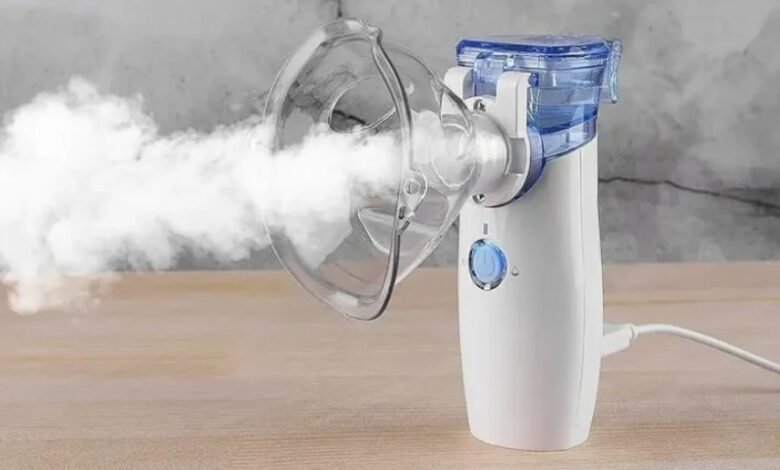
Mesh nebulizers are the newest type. A fine mesh with thousands of tiny holes vibrates to push the medicine through as a mist. They are small, light, nearly silent and often run on rechargeable batteries, which makes them ideal for travel, school and use during power outages. They also tend to waste less medicine.
Pros: portable, silent, battery-powered, efficient.
Cons: more expensive, the mesh requires careful cleaning and eventually needs replacing.
Which type should you choose?
- For regular home use on a budget: a compressor (jet) nebulizer is a reliable, cost-effective choice.
- For young children who get scared by noise: a quiet mesh model can make treatments much less stressful, and children can even be treated while asleep if the doctor agrees.
- For travel, school or areas with frequent power cuts: a rechargeable mesh nebulizer is the most practical option.
- For a wide range of prescribed medicines: a jet nebulizer offers the broadest compatibility.
Key features to compare
- Particle size: look for a device that produces particles mostly in the 1 to 5 micron range. This is the size that reaches deep into the lungs. Reputable manufacturers list this in the specifications.
- Treatment time: faster nebulization means shorter sessions, which is especially helpful with children.
- Noise level: compressor models vary a lot. Quieter devices make treatments more pleasant.
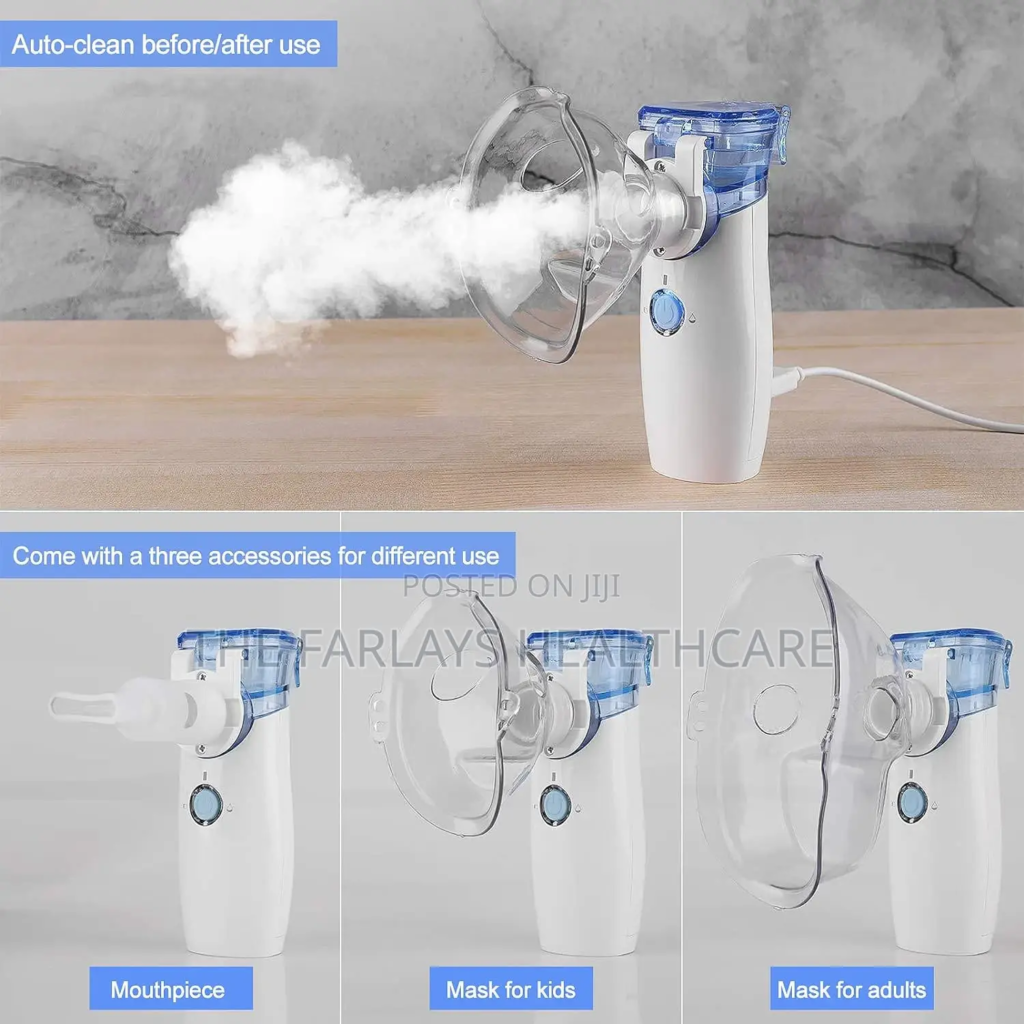
- Masks and mouthpieces: the kit should include a mouthpiece and masks in the right sizes (child and adult). A mask that fits well matters a lot for small children.
- Power options: mains, rechargeable battery or car adapter. Consider how reliable your electricity supply is.
- Spare parts: make sure replacement medicine cups, tubes, masks and filters are easy to find.
- Brand and warranty: established brands and a warranty give peace of mind for a device you may depend on.
How to use a nebulizer correctly
Always follow the instructions of your doctor and the device manufacturer. A typical treatment looks like this:
- Wash your hands thoroughly.
- Place the nebulizer on a flat, stable surface and connect the tubing to the device and the medicine cup.
- Add the exact prescribed medicine and dose to the medicine cup. Do not add anything your doctor has not prescribed.
- Attach the mouthpiece or mask. A mouthpiece is often more effective for older children and adults; a mask is better for babies and young children.
- Sit upright in a comfortable position, turn on the device and breathe normally through the mouth.
- Continue until the mist stops or the medicine cup is empty, usually within 5 to 15 minutes.
- Turn off the device, then clean the parts as described below.
Stay calm and keep children distracted with a book, cartoon or song. A relaxed, upright posture helps the medicine reach deeper into the lungs.
Cleaning and maintenance
A dirty nebulizer can spread bacteria directly into the lungs, so cleaning is not optional. General guidelines include:
- After every use: take apart the medicine cup, mouthpiece or mask, rinse with clean water and let the parts air-dry completely on a clean towel. Do not rinse the tubing unless the manufacturer allows it.
- Regularly (as the manual advises): wash the parts with warm soapy water and disinfect them using the method recommended by the manufacturer.
- Replace parts: medicine cups, masks, tubing and air filters wear out and must be replaced on the schedule in the manual.
- Do not share: each family member should have their own mouthpiece or mask.
- Store properly: keep the device and parts dry and covered in a clean place.
Common mistakes to avoid
- Holding the mask away from the face. Blowing mist near a child’s face instead of fitting the mask properly means much of the medicine never reaches the lungs.
- Treating while lying flat. An upright position helps the medicine travel deeper into the airways.
- Mixing medicines without advice. Only combine medicines in the cup if your doctor or pharmacist has said it is safe.
- Using old parts for too long. Worn cups and clogged filters reduce the amount of medicine delivered.
- Relying on the nebulizer alone. If treatments are needed more often than prescribed, the condition may be getting worse and needs a doctor’s review.
When to seek urgent medical help
A nebulizer does not replace medical care. Seek help immediately if a person has severe difficulty breathing, cannot speak in full sentences, has bluish lips or fingertips, becomes drowsy or confused, or does not improve after the prescribed treatment. Keep your doctor’s emergency plan and the number of the nearest hospital easily accessible.
Tips for buying a nebulizer
- Get a prescription first. Confirm with your doctor that a nebulizer is right for you and which type works with your medicine.
- Check that it works before paying. Turn the device on with water in the cup and make sure it produces a steady mist.
- Inspect the kit. Make sure all parts are included and clean. For a used device, buy a new mask, mouthpiece, cup and tubing.
- Look for genuine products. Unusually cheap devices from unknown sources may not produce the right particle size.
- Keep the manual and receipt for cleaning instructions, spare parts and warranty claims.
The bottom line
A home nebulizer can make living with asthma, COPD and other breathing conditions easier and safer, especially for children and older adults. Choose the type that fits your medicine and lifestyle, use it exactly as prescribed, and clean it carefully after every session. Combined with regular medical check-ups, the right nebulizer gives you more control over breathing problems and fewer anxious trips to the clinic.