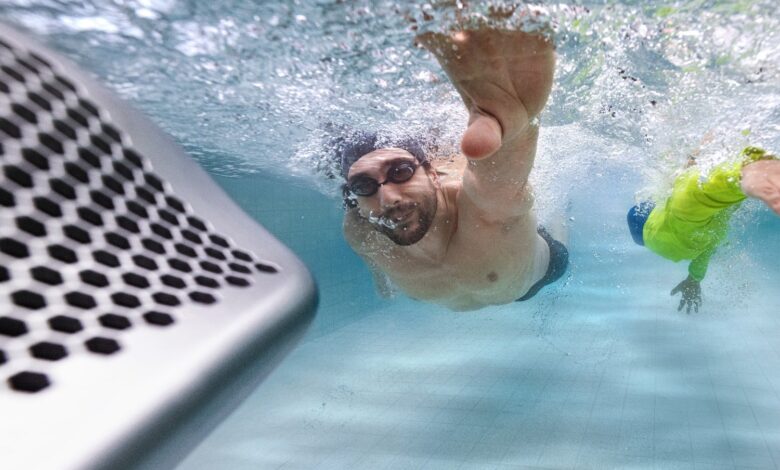
Water fitness has long been recognized as one of the most effective ways to build strength, improve cardiovascular health, and rehabilitate injuries—all while minimizing joint stress. Now, the swim jet pool has emerged as a revolutionary tool that brings the power of current-based training directly into your home. By generating a continuous, adjustable stream of water, these compact systems create an endless swimming experience that rivals open-water training in a fraction of the space. Yet here’s the challenge: many pool owners barely scratch the surface of what their equipment can deliver. They swim casually at a single speed, never exploring the full spectrum of resistance training, interval work, and technique refinement available at their fingertips. This guide is designed to change that. Whether you’re a fitness enthusiast looking to maximize calorie burn or an advanced swimmer preparing for competition, you’ll learn how to harness your swim jet pool’s full potential. We’ll cover everything from initial setup and proper technique to structured training programs and essential maintenance practices that protect your investment for years to come.
Understanding Your Swim Jet Pool: The Engine of Water Fitness
A swim jet pool is a compact aquatic training system that uses one or more powerful pumps to generate a continuous stream of water, allowing you to swim in place indefinitely. Unlike traditional pools where you push off walls every few meters, a swim jet pool eliminates the start-stop cycle entirely—creating a smooth, uninterrupted training environment that more closely mimics open-water conditions.
The core mechanism is straightforward: a high-capacity pump draws water through intake ports, then propels it back through strategically positioned jets at the front of the pool. This creates a current you swim against, and the resistance intensifies as you increase the flow rate. The result is a full-body workout where every stroke demands genuine effort against moving water, not just your own momentum. Because water provides approximately 12 times more resistance than air, even moderate current speeds deliver significant muscular engagement while cushioning joints from impact stress.
The motor driving this system is its most critical component. In environments where chlorinated or saltwater constantly contacts mechanical parts, corrosion becomes the primary threat to equipment lifespan. A corrosion-resistant motor—typically constructed with marine-grade materials and sealed housings—ensures reliable performance over thousands of hours of operation. When evaluating any swim jet system, this single component determines whether you’ll enjoy years of trouble-free training or face costly repairs. Pool configurations vary from single-jet systems suited for general fitness to multi-jet arrangements that produce wider, more uniform currents for advanced swimmers requiring precise laminar flow across their entire stroke path.
Preparing for Your First Effective Workout
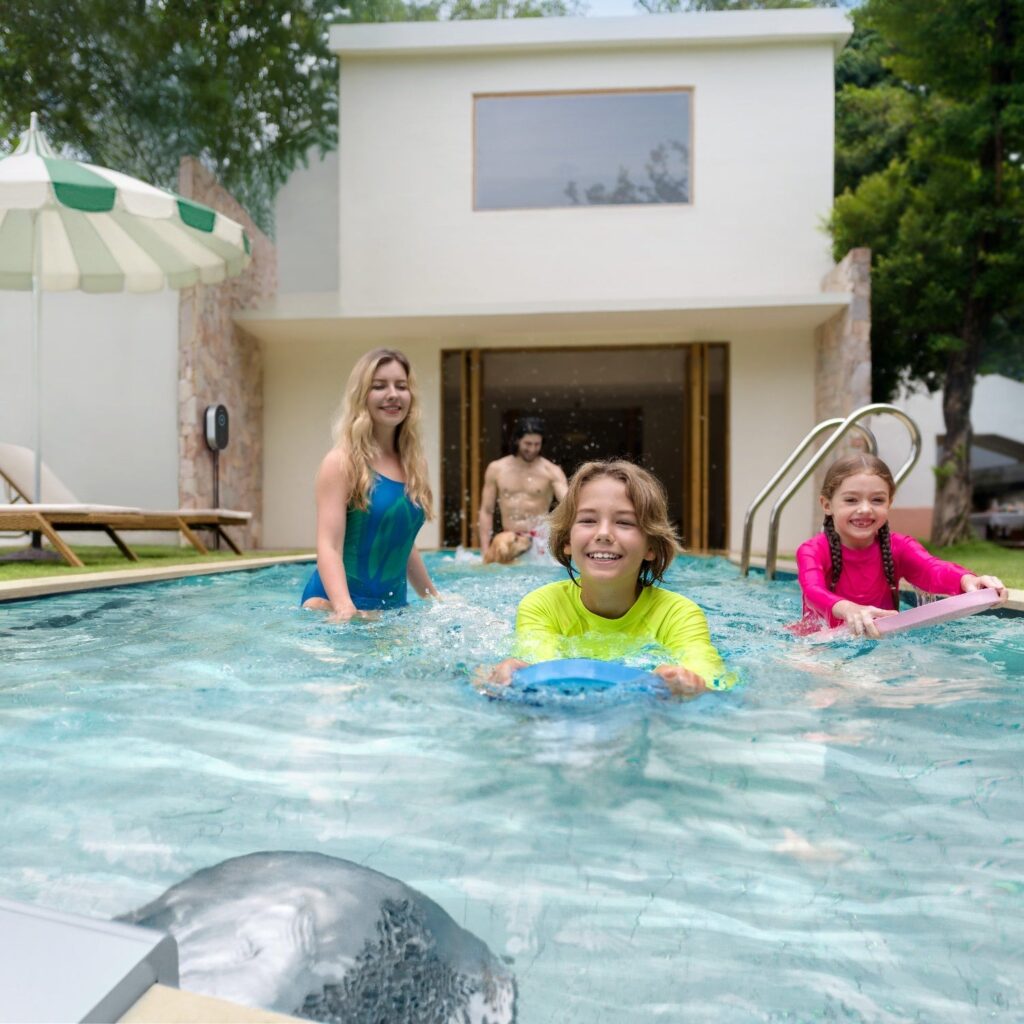
Before stepping into the current, take a few minutes to ensure your environment is safe and your body is ready for resistance-based training. Check that water chemistry is balanced—proper pH and sanitizer levels protect both your skin and your equipment. Clear the pool deck of any tripping hazards, and confirm that the jet controls are accessible from your swimming position.
A targeted warm-up on deck prepares your muscles for the unique demands of swimming against current. Spend five minutes performing arm circles, torso rotations, and dynamic leg swings to activate your shoulders, core, and hip flexors. Follow this with ankle mobility work, since propulsion in water depends heavily on flexible feet that can maintain a pointed, efficient kick position.
Once you enter the pool, position yourself approximately arm’s length from the jet outlet and adopt a streamlined posture: engage your core as though bracing for a light punch, keep your head in a neutral position with eyes looking slightly downward, and extend your body long from fingertips to toes. Before you begin stroking, simply float in the current for thirty seconds. Feel how the water pushes against you and notice where your body drifts. This awareness is essential—effective swim jet training isn’t about fighting the current with brute force but rather making continuous micro-adjustments to hold your position with minimal wasted energy. Slight shifts in hip height or head angle dramatically change your drag profile, and learning to sense these differences early will accelerate your progress in every session that follows.
See also: How General Dentistry Encourages Better Home Hygiene Habits
Step-by-Step Guide to Using Your Swim Jet Pool for Maximum Resistance
Step 1: Setting the Correct Current Speed
If you’re new to swim jet training, begin at roughly 30-40% of maximum flow. This allows you to maintain proper form while building confidence in the current. Swim at this pace for several sessions until holding your position feels natural rather than reactive. Advanced swimmers should increase speed until they find their threshold—the point where maintaining technique requires focused effort but remains sustainable for two to three minutes. This is your interval training zone. The relationship between speed and resistance is exponential, not linear: doubling the current speed roughly quadruples the drag force against your body. This means small increases on the control dial produce significant jumps in calorie expenditure and muscular demand, making precise speed selection essential for targeting specific training outcomes.
Step 2: Mastering Fundamental Strokes in Current
Swimming against a jet stream demands subtle technique adjustments that differ from pool-length swimming. In freestyle, prioritize a high elbow catch and accelerate your hand through the pull phase—any slippage in your stroke means the current pushes you backward immediately. Keep your recovery compact and close to the water’s surface to reduce frontal drag. For backstroke, maintain a steady kick tempo and focus on hip rotation; the current tends to push swimmers’ hips downward, so conscious engagement of your lower core keeps you streamlined. Breaststroke requires particular attention to the glide phase—hold your streamline longer than you would in still water, allowing the current to test your body position before initiating the next pull. Common errors include lifting the head too high during breathing, which drops the hips and dramatically increases drag, and shortening the stroke under fatigue rather than maintaining full extension. When you notice your position drifting backward, reduce current speed rather than compromising form.
Step 3: Structuring Your Water Fitness Sessions
Effective swim jet training follows deliberate structure rather than aimless swimming at one speed. For endurance development, set the current to a moderate pace you can sustain with good technique and swim continuously for 20-30 minutes, focusing on rhythmic breathing and consistent stroke count. For sprint intervals, increase the jet to 80-90% of maximum and swim hard for 30 seconds, then reduce to 40% for 30 seconds of active recovery—repeat this cycle eight to twelve times. Technique drills work best at lower speeds: try single-arm freestyle, catch-up drill, or fingertip drag at 30-40% flow, where the current provides just enough feedback to reveal inefficiencies without overwhelming your coordination.
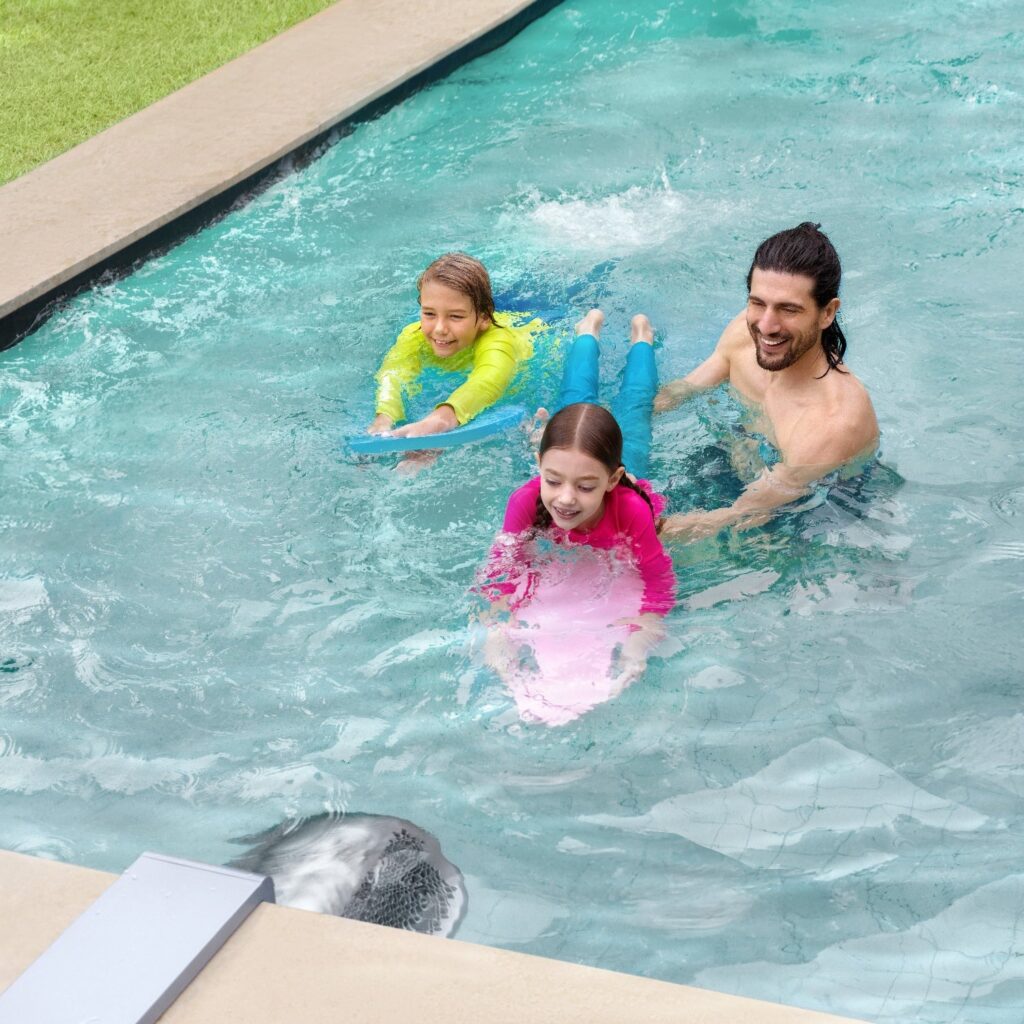
The variable speed control is your most powerful programming tool. Simulate open-water race conditions by alternating between moderate and high speeds every two minutes, mimicking the surges you’d encounter in competition. For structured pyramid sets, swim one minute at moderate effort, one minute at hard effort, one minute at maximum effort, then reverse the sequence. Track your sessions by recording total training time, the speed settings used, and your perceived exertion at each level. Over weeks, you’ll notice that speeds which once felt maximal become your new moderate—a clear, measurable sign of fitness progression that keeps motivation high and guides your next intensity increase.
Ensuring Longevity: Maintaining Your Corrosion-Resistant Motor and Pool
Consistent performance from your swim jet pool depends directly on how well you maintain its mechanical and chemical systems. Neglecting routine care doesn’t just shorten equipment life—it gradually degrades your training experience as flow rates diminish, water clarity suffers, and components fail at the worst possible moment. A proactive maintenance approach keeps your sessions uninterrupted and protects your investment over the long term.
On a weekly basis, inspect and clean the intake filters to prevent debris accumulation that restricts water flow and forces the pump to work harder than necessary. Check the jet nozzles for any blockages or calcium deposits that could disrupt the laminar flow pattern you depend on for smooth training. Test your water chemistry twice weekly, maintaining balanced pH, alkalinity, and sanitizer levels—imbalanced water accelerates corrosion on every metal surface it contacts. Monthly, examine the pool shell and plumbing connections for signs of leaks, inspect electrical connections for moisture intrusion, and lubricate any accessible seals or gaskets according to your owner’s manual. Many owners now integrate smart home platforms like iGarden to automate water quality monitoring and receive alerts when chemical levels drift outside optimal ranges—reducing the guesswork and ensuring your equipment operates in a consistently safe environment.
The motor deserves particular attention because it operates continuously under demanding conditions. A corrosion-resistant motor—built with marine-grade stainless steel shafts, sealed bearings, and protective coatings—is engineered to withstand constant exposure to chemically treated water. However, even the most robust motor benefits from deliberate care. Follow the manufacturer’s recommended servicing schedule, which typically includes professional inspection every 12 to 18 months. Between service visits, listen for unusual vibrations or changes in sound pitch during operation, monitor for any reduction in maximum flow output, and watch for water seepage around the motor housing. These early warning signs, caught promptly, often mean the difference between a simple seal replacement and a complete motor rebuild. Keep the area around the motor housing clean and well-ventilated to prevent heat buildup, and never allow standing water to pool around electrical connections. By treating your motor as the precision instrument it is, you ensure that every training session delivers the full, powerful current your fitness goals demand.
Advanced Techniques for the Dedicated Swimmer
Once you’ve mastered fundamental strokes and structured interval training, your swim jet pool becomes a laboratory for elite-level performance refinement. Hypoxic training—deliberately reducing breathing frequency while swimming against current—develops the oxygen efficiency that separates competitive swimmers from recreational ones. Begin by breathing every five strokes at moderate current speed, then progress to every seven or nine strokes as your comfort increases. The constant resistance ensures you can’t coast between breaths, forcing genuine cardiovascular adaptation under controlled, repeatable conditions.
Flip turns gain a new dimension when performed against flowing water. Position yourself so the current pushes you toward the wall, then execute your turn and drive back into the stream. This trains explosive push-off power and streamlined breakouts under resistance that exceeds anything a still-water pool provides. Film these turns with a waterproof camera mounted on the pool floor or wall—reviewing footage reveals subtle inefficiencies in your rotation timing, tuck position, and streamline angle that feel invisible during execution but cost precious tenths of a second in competition.
Swim-specific strength work transforms your jet pool into a resistance machine beyond traditional swimming. Vertical kicking in the current’s path builds leg power and core stability simultaneously—maintain an upright posture with arms crossed over your chest and kick hard enough to hold position against moderate flow. Stationary pulling with a tether or resistance band, combined with the jet’s force, overloads your catch and pull phases far beyond what bodyweight swimming alone achieves. For event preparation, periodize these tools across training blocks: build aerobic capacity with long, moderate sessions during base phase, layer in high-intensity intervals and hypoxic work during the sharpening phase, then taper volume while maintaining speed in the final week before competition.
Transform Your Training With Purpose and Consistency
A swim jet pool is far more than a compact swimming space—it’s a complete, high-resistance training system capable of delivering fitness gains that rival open-water and full-length pool training. The key to unlocking its potential lies in three interconnected pillars: mastering proper technique against current, building structured workout programs that progressively challenge your body, and maintaining your equipment with the care it demands. Your corrosion-resistant motor is the foundation of every session, and protecting it through balanced water chemistry, routine inspections, and timely professional servicing ensures that powerful, consistent current delivery remains available whenever you’re ready to train. From your first cautious strokes at low speed to advanced hypoxic sets and competition-specific periodization, each phase of your development builds on the last. The adjustable resistance at your fingertips means you’ll never outgrow this tool—it scales with you indefinitely. Stop treating your swim jet pool as a luxury feature that sits idle between occasional casual swims. Step in with purpose, follow a plan, push the speed dial higher as your fitness demands it, and transform that compact body of water into the most effective training hub in your home. The current is always ready. Now you are too.