You know the drill: One group chat. Twelve people. Endless chaos.
Someone asks a question. Four people reply at once. One person’s on mute. Another didn’t see it until an hour later. The moment’s gone—and so is the momentum.
Group communication, especially in fast-moving environments like events, construction, logistics, or even outdoor adventures, has one consistent enemy: the message bottleneck.
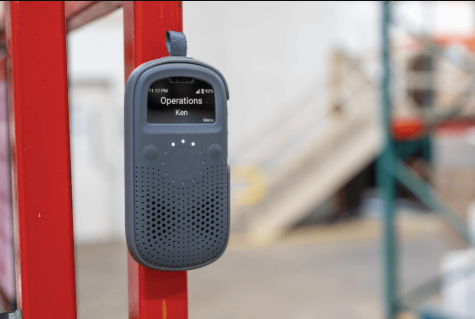
Enter the walkie talkie—the underappreciated hero of real-time, frictionless team coordination.
Forget the lag. Push-to-talk wins every time.
Unlike texts, emails, or even app-based team chats, walkie-talkies don’t make you wait for a reply. You press a button, say what you need, and your whole team hears it in real time.
No app updates. No signal bars. No “left you on read.”
Just instant voice—broadcast to the group.
That immediacy is a bottleneck-killer. It cuts down on misunderstandings, speeds up response times, and keeps everyone synced, especially when decisions need to happen fast.
One message, many ears
A key advantage of a walkie talkie is group broadcasting.
With phones, you call one person at a time—or spin up a group call that half the people miss. Walkie-talkies? One message reaches everyone on the same channel, instantly.
There’s no room for “I didn’t get that text.”
Everyone hears the same info at the same time. Fewer gaps, less confusion, better results.
Simplicity scales
Sometimes, overcommunication is worse than no communication. The more tools you add—apps, channels, threads—the more room for error. It’s like trying to yell across a crowded stadium and hoping the right person hears you.
Walkie-talkies keep it simple:
- One button.
- One voice at a time.
- One clear message.
That single-thread simplicity is what makes them so effective in group scenarios. No noise. No filters. No misrouted emails.
No Wi-Fi? No problem.
Message bottlenecks often happen when digital tools fail. Weak signal. Dead zones. App crashes.
But walkie-talkies? They run on radio frequencies, not cell towers. That makes them ideal for:
- Remote job sites
- Mountain trails
- Parking decks
- Dense buildings
- Festival grounds
When apps freeze or phones die, walkie talkies keep talking. That reliability eliminates downtime and lets teams keep moving, regardless of signal.
Hierarchy without hassle
Most walkie-talkies allow channel switching or privacy codes, which means you can set up communication layers. Think:
- Channel 1: General team
- Channel 2: Team leads only
- Channel 3: Emergency traffic
This structure creates natural flow and reduces the “all-talk chaos” that happens in massive groups. Team leads can coordinate at a higher level without clogging the general chatter.
Bottlenecks often happen when one person becomes the go-between. With channel management, that middleman bottleneck disappears.
Fast feedback = fast decisions
Walkie-talkies aren’t just about sending messages—they’re about closing the loop.
You give an instruction. You hear a “copy that.” You know it landed.
Instant confirmation means less waiting, less wondering, and no redundant check-ins.
And if something goes wrong? You can pivot in real time. No email chains. No update requests. Just direct course correction.
Closing thoughts: When speed matters, clarity rules
Most message jams don’t come from bad tech. They come from too much tech—or tech used in the wrong place.
In fast-paced group environments, clarity and speed are the two pillars of communication. Walkie-talkies provide both. They’re not fancy. They’re not new. But they work better than almost anything else when it comes to keeping teams aligned and moving.
Because when it’s go-time, the last thing you want is to be stuck refreshing a chat app.